
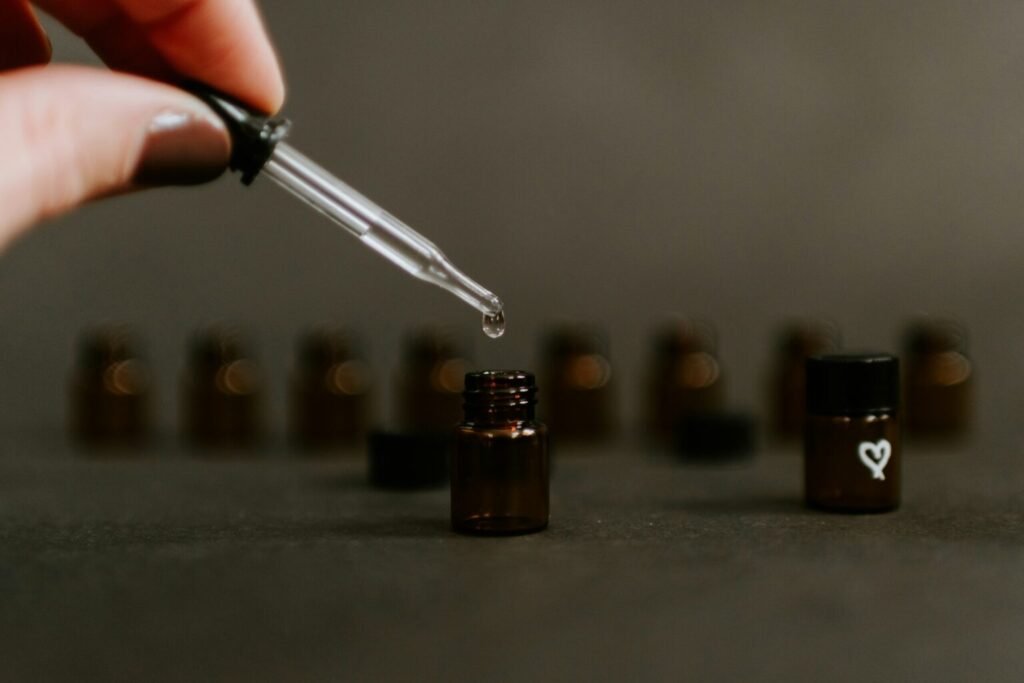
The suitcase is zipped, your boarding pass is on your phone, and then you notice three little amber bottles still sitting on the bathroom counter. Can you bring essential oils on a plane, or are they about to become an awkward conversation at airport security?
For most travelers departing from the United States, small personal-use roll-ons can travel in a carry-on when they meet TSA liquid limits and any applicable FAA and airline rules. A 10 mL bottle is well below the TSA’s 100 mL container limit, but it still counts as a liquid and belongs in your quart-sized liquids bag.
That is the short answer. The more useful answer is knowing how to prevent leaks, avoid heat damage, and use aromatic products without turning seat 18A into an unwilling aromatherapy session.
The Airport Answer in 30 Seconds
- Each carry-on liquid container must generally hold no more than 3.4 ounces or 100 mL.
- Carry-on liquids must fit inside one quart-sized, clear, resealable bag.
- Each passenger is normally allowed one liquids bag.
- A 10 mL essential oil roll-on fits comfortably under the container-size limit.
- Airport security rules and aviation hazardous-material rules are separate considerations.
- The TSA officer makes the final decision at the checkpoint.
- International airports and individual airlines may apply different rules.
The current TSA 3-1-1 liquids rule permits containers of 3.4 ounces or less inside one quart-sized liquids bag. Check the official guidance again shortly before traveling because screening procedures can change.
Why Bottle Size Is Only Part of the Story
Passing through a TSA checkpoint is not the same as confirming that every liquid formula is acceptable for air transport.
The TSA focuses on security screening and liquid volume. The FAA regulates hazardous materials carried aboard aircraft. Some concentrated oils or fragrance products may be flammable, while personal-care products may qualify under medicinal and toiletry exceptions when carried within stated limits.
If you are uncertain about a particular formula, check the product label, ask the manufacturer, consult the airline, or review the FAA PackSafe guidance for personal-care articles.
Do not describe a cosmetic comfort oil as medically necessary simply to avoid normal liquid rules. Most 10 mL roll-ons do not need an exception because they already fall far below the standard carry-on size limit.
Carry-On or Checked Bag?
For a few small roll-ons, a carry-on is usually the more practical location. You can monitor the bottles, temperatures are generally less extreme than in storage areas, and you are less likely to discover an oil-soaked suitcase at your destination.
| Carry-On | Checked Bag |
|---|---|
| Must follow the TSA 3-1-1 liquids rule | Not subject to the TSA carry-on liquids bag |
| Easier to protect from rough handling | More room, but bottles may be handled roughly |
| Kept closer to normal cabin conditions | May experience greater temperature changes |
| Easy to inspect if security asks | Leaks may remain unnoticed for hours |
| Strong aromas should not be used casually in flight | Products remain unavailable during the journey |
Whichever bag you choose, confirm the airline’s policy. A permitted item may still receive additional screening, and an airline can apply restrictions beyond the general checkpoint rule.
How to Pack a 10 mL Roll-On Without Leaks
A roll-on bottle is small enough to disappear into the corner of a toiletry bag—which is exactly why it is easy to pack carelessly. Give each bottle a minute of attention before closing your suitcase.
Check the Cap at Home
Make sure the roller insert is firmly seated and the cap closes evenly. Wipe away any oil around the bottle neck. If a bottle already seeps while standing on your bathroom counter, it is not ready for a pressurized travel day.
Give Every Bottle Its Own Small Bag
Place the bottle in a small resealable bag before adding it to your TSA liquids bag. This extra layer contains minor leaks and keeps the label from absorbing oil.
Do not wrap adhesive tape directly over a paper label. It may tear the label or make important directions unreadable.
Keep the Original Label Visible
An unmarked amber bottle invites more questions than a clearly labeled personal-care product. Keep the product in its original container with the name, volume, and directions visible.
Protect the Glass
Place glass bottles between soft items or inside a structured toiletry case. Avoid an outside luggage pocket where the bottle can take the full impact of a dropped bag.
A Small Travel Set Is Better Than the Entire Shelf
Travel tends to encourage fantasy packing. You imagine sunrise yoga, perfect sleep, leisurely dinners, and enough time to use eight different oils. Then the trip begins, and you use the same two bottles every day.
Choose products by moments you are likely to encounter rather than packing every option “just in case.”
For Dry Cabin and Hotel Air
Breathe Clear Nasal Relief Oil can be packed as part of a personal nasal-comfort routine when used according to its label. Do not put a general essential oil blend inside your nostrils or add it to another passenger’s environment.
For an Unfamiliar Bedtime
Deep Rest & Harmony Sleep Oil can provide a familiar aromatic cue when the hotel room, time zone, and pillow all feel new. It should support a bedtime ritual rather than promise to overcome jet lag or treat insomnia.
For After-Meal Comfort
Digestive Harmony Stomach Relief Oil may fit into a quiet topical routine after a long travel meal when used as directed. It does not replace medical care for severe or persistent abdominal symptoms.
For Dry, Stressed Skin
Skin Rescue & Repair Botanical Oil can be reserved for intact skin that feels dry after repeated handwashing, sun, wind, or air conditioning. Do not apply cosmetic oil to an open wound or active burn.
Two or three products are usually enough. A smaller set is easier to pack securely, easier to track, and less likely to overwhelm a hotel room with fragrance.
Should You Use Essential Oils During the Flight?
Being allowed to carry a product does not automatically make it considerate to use in a crowded cabin.
Your seatmate may have asthma, migraine, nausea, fragrance sensitivity, or simply a strong dislike of peppermint. Airplane cabins are shared spaces with limited opportunities to move away from an aroma.
- Do not open multiple bottles to compare scents.
- Do not place oil on the seat, tray table, blanket, or air vent.
- Do not use a diffuser or add oil to a cup of hot water.
- Do not apply a strongly scented product near another passenger’s face.
- Do not offer an oil to a stranger as a medical remedy.
- Ask a crew member before using anything that releases a noticeable vapor or odor.
In many cases, the most courteous choice is to keep the bottle closed until you reach the airport restroom, hotel, rental car, or another private space.
The Hotel-Room Mistake to Avoid
Do not add essential oils to a hotel humidifier, iron, kettle, bathtub, or air-conditioning unit. These appliances are not yours, may not be designed for oils, and can retain fragrance after you check out.
A small topical roll-on used according to its label is easier to control. It does not scent the entire room, require cleaning unfamiliar equipment, or leave residue for the next guest.
Be equally careful with hotel linens. Allow a topical oil to settle before lying on white sheets, and avoid placing uncapped bottles on porous furniture.
Do Not Leave Essential Oils in a Hot Car
A parked car can become far hotter than the outdoor temperature. Extended heat and direct sunlight can affect the aroma, color, packaging, and stability of botanical products.
Keep bottles upright in a cool, shaded bag and take them with you when leaving the vehicle for long periods. Do not store them on the dashboard, windowsill, or beside a sunny hotel window.
If a product smells unexpectedly different, has changed color dramatically, is leaking, or shows damage around the roller insert, stop using it and contact the manufacturer.
International Flights Need an Extra Check
The TSA rules apply to security screening for departures from the United States. Your return airport may use different procedures, even when the flight is headed back to the U.S.
Before an international trip, check:
- The departure airport’s liquid rules.
- Your airline’s hazardous-material and baggage policies.
- Rules for connecting airports where you may be screened again.
- Customs restrictions on plant, cosmetic, or medicinal products.
- Whether labels must remain in their original language or packaging.
Do not assume that passing through one airport guarantees acceptance everywhere else on the itinerary.
Your Before-Zipping Checklist
- The bottle holds 100 mL or less for a U.S. carry-on.
- The original product label is attached and readable.
- The roller insert and cap are secure.
- The bottle has no existing leak or crack.
- Each bottle is protected inside a small resealable bag.
- All carry-on liquids fit in the quart-sized liquids bag.
- You checked the airline and departure-airport rules.
- You packed only products you realistically expect to use.
Take a photo of the products and labels before departure. It can help you remember what you packed and gives you the manufacturer information if a bottle is lost or damaged.
A Few Questions Travelers Actually Ask
Do essential oil roll-ons go in the liquids bag?
Yes. A roll-on contains liquid, so place it in your quart-sized liquids bag when passing through a standard U.S. TSA checkpoint.
Can I bring several 10 mL bottles?
Several small bottles may be packed as long as all carry-on liquids fit inside your permitted quart-sized bag and the products comply with FAA, airline, and destination rules.
Can I transfer oil to an unmarked travel bottle?
It is better to keep the original labeled container. An unmarked bottle makes directions harder to follow and may invite questions during screening.
Can essential oils leak because of cabin pressure?
Temperature changes, loose closures, damaged roller inserts, and handling can all contribute to leaks. Check the closure, keep the bottle upright, and use a secondary resealable bag.
Can I apply a nasal oil during the flight?
Follow the label and consider nearby passengers. Strong aromas can affect other people in a shared cabin. Review our guide to safe essential oil use around the nose before traveling.
Small Bottles, Thoughtful Travel
A 10 mL roll-on is naturally travel-friendly, but good packing is about more than fitting under a liquid limit. Keep the label visible, protect the glass, check the formula and airline rules, and remember that fragrance does not stay politely within the boundaries of your own seat.
Pack the two or three products connected to routines you genuinely use. Leave the rest at home. Your liquids bag—and probably your seatmate—will appreciate the restraint.