
The workday may be over, but your shoulders have not received the message. They are still lifted toward your ears, your jaw is holding the last difficult conversation, and your neck remembers every hour spent looking at a screen.
This is where a transition ritual can be useful. Not a workout, not a deep massage, and not another task to complete perfectly. Just seven minutes to help your body leave desk mode before dinner, family time, or rest.
The Desk-to-Dinner Reset combines gentle movement, intentional touch, and a properly formulated topical oil. It is designed for ordinary end-of-day stiffness and relaxation, not for treating an injury or medical condition.
Why Screen Days Settle in the Neck and Shoulders
Screen work often asks the body to remain still while the hands and eyes stay active. Over time, the head may drift forward, the shoulders may rise, and one arm may work harder while controlling a mouse or phone.
There is no single perfect posture that must be held all day. In fact, even a comfortable posture becomes tiring when it never changes. The OSHA computer workstation guidance recommends changing position regularly, relaxing the shoulders, and periodically standing or walking.
That is the idea behind this ritual: create movement and sensory contrast after a long period of sameness.
First, Read Your Three-Point Tension Map
Before reaching for an oil, take 30 seconds to notice where the workday is still showing up. This is not a pain score or medical assessment. It is simply a way to make the ritual more personal.
1. The Shoulder Shelf
Let both arms hang naturally. Are your shoulders resting at the same height, or is the side that uses the mouse sitting slightly higher? Exhale and notice whether they lower without being forced.
2. The Neck Hinge
Look straight ahead, then slowly turn your head a small distance to each side. Does one direction feel less comfortable? Stay within an easy range and do not push through resistance.
3. The Jaw Signal
Allow your teeth to separate and rest your tongue gently. A clenched jaw can be an easy-to-miss sign that the nervous system is still carrying the pace of the day.
Your goal is not to force tension away. It is to give your body a clear signal that the workday has changed.
The 7-Minute Desk-to-Dinner Reset
Set your phone aside and choose a place where you can stand or sit without interruption. Keep every movement small and comfortable.
Minute 1: Close the Work Loop
Place both feet on the floor. Let your arms hang by your sides and look toward something farther away than your screen.
Inhale gently through your nose. During the exhale, imagine the weight of your elbows drawing your shoulders downward. Repeat for four slow breaths without pulling or forcing your shoulders back.
Minute 2: Warm the Oil
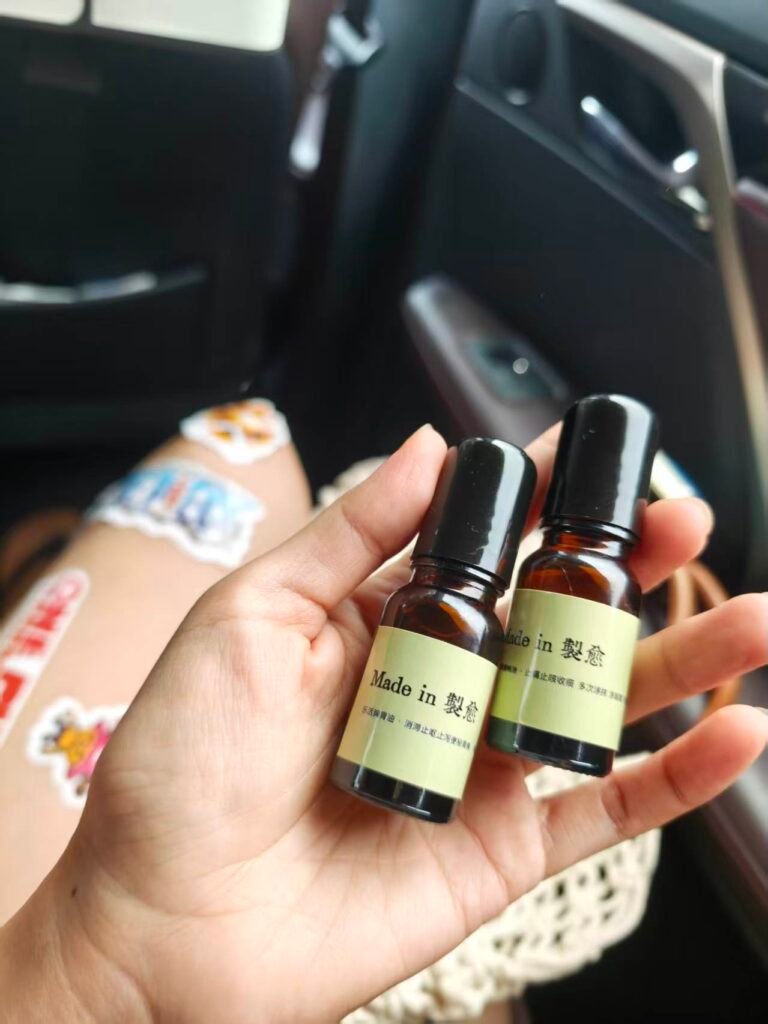
Apply a small amount of a properly formulated topical oil to your palm, following its label directions. Rub your hands together briefly to spread the product and warm your touch.
Muscle & Joint Recovery Tension Relief Oil can be incorporated into this comfort ritual when used as directed. Avoid broken or irritated skin and wash your hands after application.
Minutes 3–4: Use the Shoulder-to-Arm Glide
Place your right hand on top of your left shoulder. Use the broad surface of your palm rather than digging in with your fingertips.
- Begin near the base of the neck without pressing on the spine.
- Glide slowly across the top of the shoulder.
- Continue down the outside of the upper arm.
- Release your hand before reaching the elbow.
- Repeat three to five times, then change sides.
The movement should feel smooth and reassuring. Skip deep kneading, forceful pressure, and direct pressure over the front or sides of the neck.
Minute 5: Make Room Across the Chest
Stand or sit tall without stiffening your back. Turn your palms forward and allow your arms to move slightly away from your body. Keep your ribs relaxed.
Hold this open position for one comfortable breath, then release. Repeat three times. This is a small movement, not a dramatic stretch.
Minute 6: Move, Do Not Grind
Make three slow shoulder circles in each direction. Then turn your head gently to the right and return to center. Repeat on the left.
Stay inside a comfortable range. Do not roll your head in a full circle or use your hand to pull it farther. The purpose is to reintroduce easy movement after sitting still.
Minute 7: Reset Tomorrow’s Desk
Use the final minute to change one part of the environment that contributed to today’s tension.
- Move the mouse closer so your elbow can remain near your body.
- Raise or reposition the screen so you do not repeatedly look downward.
- Place frequently used objects within easy reach.
- Adjust the chair so your feet feel supported.
- Leave yourself a visible reminder to stand and change position.
This final step makes the ritual more than temporary comfort. It changes one condition you will meet again tomorrow.
What a Topical Essential Oil Can and Cannot Do
A topical botanical oil can add glide to self-massage, reduce friction, and provide an aroma associated with a specific transition ritual. Repeating the same scent and sequence may also make it easier to recognize that the workday is ending.
It cannot correct an injury, replace movement, repair an unsuitable workstation, or diagnose the cause of persistent pain. The value comes from the complete ritual: pause, touch, move, and change the environment.
The Texture Test: Is Your Pressure Too Strong?
Many self-massage instructions say to use “gentle pressure,” but that can be difficult to interpret. Use these three practical signs:
- Your breathing stays normal: You are not holding your breath or tightening your stomach.
- Your shoulder stays relaxed: The area is not bracing against your hand.
- Your skin feels comfortable afterward: There is no burning, sharp pain, or lingering irritation.
If any of these conditions change, reduce the pressure or stop. A stronger massage is not automatically a more effective massage.
Topical Essential Oil Safety
Essential oils are concentrated. Products intended for topical use should be properly diluted and used according to their labels.
- Patch test a new topical product before wider use.
- Do not apply oils to broken, inflamed, or freshly shaved skin.
- Keep the product away from the eyes, mouth, and front of the neck.
- Do not apply a topical blend inside the nose or ears.
- Do not swallow a product intended for external use.
- Keep essential oils away from children and pets.
- Stop using the product if redness, itching, burning, or a rash develops.
The National Center for Complementary and Integrative Health notes that topical peppermint oil may cause skin irritation or rashes in some people.
If you also use aromatic products around your breathing area, read our guide to using oils safely around the nose. Products intended for external skin application should never be placed inside the nostrils.
When to Skip the Ritual and Seek Advice
Do not massage an area affected by a recent injury, unexplained swelling, significant bruising, infection, numbness, or severe pain.
Seek medical advice if neck or shoulder symptoms persist for several weeks, continue getting worse, or interfere with normal activities. Get prompt help if symptoms follow a significant injury or occur with weakness, numbness, tingling, severe headache, dizziness, balance problems, or changes in vision or speech.
The NHS neck pain guidance provides additional information about self-care and when symptoms need professional assessment.
Turn the Reset into an Evening Cue
The Desk-to-Dinner Reset becomes more useful when it has a consistent place in your day. Try connecting it to an action that already happens, such as closing your laptop, changing clothes, or placing your phone on charge.
On especially busy evenings, complete only the first, third, and seventh minutes: breathe, use a gentle shoulder glide, and correct one desk detail. A shorter ritual you actually repeat is more useful than a complicated routine you avoid.
If mental momentum follows you into the evening, pair this physical reset with our guide on how to quiet a racing mind before bed. For a separate bedtime ritual, you can also explore Deep Rest & Harmony Sleep Oil.
Frequently Asked Questions
Which essential oil is best for neck and shoulder tension?
There is no single essential oil that is best for everyone. Choose a properly diluted topical product with an aroma you enjoy, clear usage directions, and ingredients suitable for your skin. The oil should support comfortable massage rather than replace movement or medical care.
Can I apply essential oils directly to my neck?
Do not apply undiluted essential oils directly to the skin. Use a properly formulated topical product as directed, avoid the front of the neck, and patch test before wider application.
How often can I do the Desk-to-Dinner Reset?
The gentle breathing and movement portions can fit into many workdays. Follow the topical product label regarding frequency and stop if the routine increases discomfort or irritates your skin.
Should I massage a painful knot deeply?
Avoid forceful pressure, especially when you do not know why an area hurts. Use broad, comfortable contact and seek professional guidance for persistent, severe, or unexplained symptoms.
A Better Ending to a Screen-Heavy Day
You do not need to erase every trace of the workday in seven minutes. The purpose of this ritual is smaller and more realistic: notice what your body is holding, create a little movement, and change one condition before tomorrow.
Close the laptop. Let your shoulders lower. Give your hands something gentler to do. That is enough to mark the transition.