
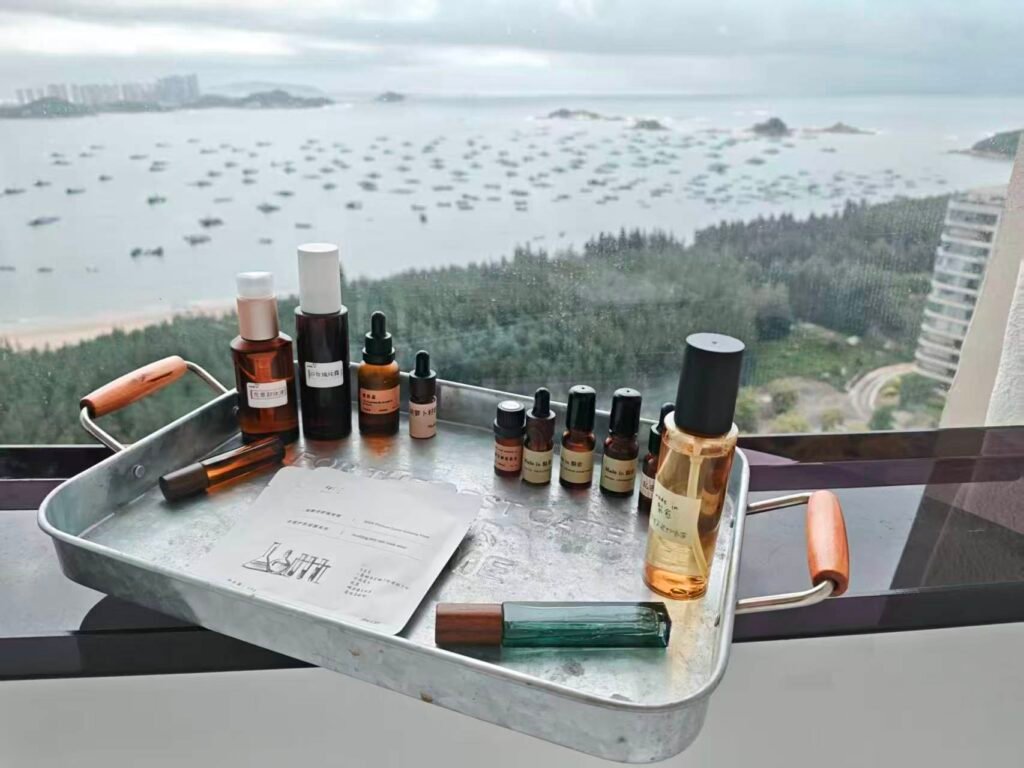
A botanical body oil can look gentle, smell inviting, and contain familiar plant ingredients—and your skin may still respond differently from someone else’s. “Natural” describes where an ingredient came from. It does not predict how every person’s skin will react.
That is why a small-area skin check deserves a place between opening a new topical oil and applying it widely. The goal is not to prove that a product is universally safe. It is to notice whether your own skin shows an unwanted response under limited, controlled use.
This guide explains how to patch test essential oils and botanical body oils at home, what changes to watch for, and when a dermatologist’s medical patch testing is more appropriate.
First: A Home Skin Check Is Not a Medical Patch Test
People often use the phrase “patch test” for two different processes.
| Home Small-Area Test | Medical Patch Testing |
|---|---|
| Uses a finished cosmetic or topical product | Uses selected allergens under professional supervision |
| Looks for an obvious reaction before wider use | Helps diagnose allergic contact dermatitis |
| Does not identify the exact ingredient responsible | May help identify a specific allergen |
| Does not guarantee a future reaction will never occur | Is interpreted by a qualified healthcare professional |
The home method in this article is better understood as a small-area use test. If you already have a persistent rash, repeated reactions, or a suspected allergy, experimenting with more products at home is not the right diagnostic approach.
Why Test a Botanical Oil Before Wider Use?
Essential oils and fragrance ingredients can cause irritation or allergic reactions in some people. A product may be comfortable for many users while still being unsuitable for an individual.
The U.S. Food and Drug Administration’s aromatherapy guidance explains that plant-derived, natural, or organic ingredients are not automatically free from irritation or allergy risk.
A small-area test is especially useful when:
- You are introducing a new leave-on body oil.
- The formula contains essential oils or fragrance ingredients.
- Your skin has reacted to cosmetics in the past.
- You plan to apply the product over a larger body area.
- You have not used the product for a long time or its formula has changed.
Test the Finished Product, Not Undiluted Essential Oil
If you purchased a ready-to-use body oil or roller, test that finished product exactly as its label directs. Do not place undiluted essential oil on your skin simply to see whether you react.
Undiluted essential oils are concentrated and may irritate the skin. A reaction to an overly concentrated test does not tell you how your skin would respond to a properly formulated product.
Skin Rescue & Repair Botanical Oil should be tested and used according to the directions on its own label. Do not add extra essential oils to the product before testing it.
The 7-to-10-Day Small-Area Skin Check
The American Academy of Dermatology recommends testing a new skin care product on a small area twice daily for seven to 10 days. A longer observation window is more informative than applying a product once and checking it an hour later.
Step 1: Read the Entire Label
Check the ingredient list, application directions, warnings, and intended body area. Do not test a product on your skin if the label says it is intended only for diffusion or another non-topical use.
If you recognize an ingredient that has caused a previous reaction, avoid the product rather than deliberately testing it again.
Step 2: Choose a Quiet Test Area
Select a small area where the product will not be constantly rubbed or washed away. The underside of the forearm or the bend of the elbow is commonly used for home product testing.
Choose skin that is currently calm and intact. Do not test over:
- A rash, cut, scrape, or burn.
- Freshly shaved or waxed skin.
- Sunburned or wind-irritated skin.
- An active eczema flare.
- An area already covered with several other products.
Step 3: Establish a Baseline
Look at the test area before applying anything. Notice its normal color and texture. If helpful, take a clear photo in neutral lighting so you are not relying only on memory later.
This simple baseline is part of what makes the method more useful: you are comparing the skin with itself, not with an imagined version of “perfect” skin.
Step 4: Apply the Normal Amount
Apply the amount and thickness you would normally use on an area of that size. Using an unusually tiny amount may not represent normal use, while flooding the spot with product creates an unnecessarily harsh test.
Unless the product label says otherwise, do not tightly cover the test area with plastic, a bandage, or tape. Occlusion can change how ingredients interact with the skin and is part of professional testing protocols that should not be improvised at home.
Step 5: Repeat Consistently
Apply the product to the same small area twice daily for seven to 10 days, following the product instructions. Leave it on for the same amount of time you would during normal use.
Test only one new leave-on product in that spot. If you layer several products together and the skin reacts, you will not know which one may have contributed.
Step 6: Check More Than Once
Observe the area before each application and again later in the day. Some irritation appears quickly, while allergic contact reactions may take longer to become visible.
Stop the test if you notice redness, persistent itching, swelling, hives, blistering, increasing warmth, burning, or pain.
Use the Three-Column Skin Note
You do not need a complicated diary. Record three details once a day:
| What You Applied | What You Felt | What You Saw |
|---|---|---|
| Product and approximate time | Comfortable, itchy, warm, stinging, or burning | No change, redness, bumps, swelling, or peeling |
Separating sensation from visible appearance is useful. Skin can look unchanged while feeling increasingly itchy, or it can appear slightly pink from rubbing without producing continuing discomfort.
What Counts as a Possible Reaction?
A possible reaction may include:
- Redness that persists or expands.
- Itching that continues after application.
- Raised bumps, hives, or blistering.
- Swelling around the test area.
- Burning, pain, or pronounced stinging.
- Dryness, cracking, flaking, or peeling that was not present before.
The FDA notes that cosmetic allergies commonly appear as itchy red rashes or contact dermatitis. Reactions can vary, so do not keep reapplying a product to “confirm” a worsening response.
A home test is a pause before wider use—not a challenge your skin must pass through discomfort.
What to Do If Your Skin Reacts
- Stop applying the product.
- Gently wash it off without scrubbing.
- Do not cover the reaction with additional scented products.
- Keep the product packaging and ingredient list.
- Contact an appropriate healthcare professional if the reaction is severe, spreading, persistent, or concerning.
Seek urgent medical help for trouble breathing, facial or throat swelling, faintness, or another sign of a severe allergic reaction.
The FDA recommends stopping use and contacting a healthcare provider after an unexpected cosmetic reaction. Consumers in the United States can also report adverse cosmetic events through the FDA cosmetic complaint system.
If the Test Area Stays Calm
No visible or sensory reaction after the test period is reassuring, but it is not a lifetime guarantee. Sensitivity can develop later, and skin condition can change with weather, illness, shaving, sun exposure, or the use of other products.
When beginning wider use:
- Follow the product label.
- Start with a limited body area.
- Avoid applying to damaged skin.
- Do not increase the amount in an attempt to get faster results.
- Stop if a delayed reaction develops.
Why “Natural” and “Hypoallergenic” Are Not Guarantees
Words such as “natural,” “clean,” and “botanical” may describe a product’s positioning or ingredients, but they do not mean that every person will tolerate it.
The FDA also cautions that “hypoallergenic” does not guarantee that a cosmetic will never cause an allergic reaction. Ingredient awareness, clear directions, and careful use remain important.
This does not make botanical oils inherently unsafe. It means they deserve the same thoughtful introduction as other leave-on skin products.
Common Patch-Test Mistakes
Testing for Only a Few Minutes
A quick check may identify immediate burning, but it can miss a reaction that develops after repeated exposure.
Testing Several Products Together
Layering products makes the result difficult to interpret. Introduce one new topical product at a time.
Using Undiluted Essential Oil
Test the ready-to-use formulation. Do not apply concentrated essential oil directly to the skin as a shortcut.
Testing on Already Irritated Skin
A compromised area cannot provide a useful baseline and may react more strongly.
Ignoring the Product Label
A home skin check does not override warnings, age restrictions, sun precautions, or application limits printed on the product.
Where This Safety Step Fits in Your Oil Routine
Complete the small-area test before adding a new botanical oil to a larger skin or massage routine. Once the product appears compatible with your skin, continue following its intended use and directions.
For massage applications, read our guide to using essential oils for sore muscles after activity and our neck and shoulder oil ritual.
Topical safety becomes even more important near sensitive areas. Before using aromatic products around your breathing area, review which oils are safe around the nose. Never place a standard body oil inside the nostrils.
Frequently Asked Questions
Is 24 hours long enough to patch test essential oils?
A single 24-hour check may miss reactions that appear after repeated use. Dermatologists recommend testing a new skin care product on a small area twice daily for seven to 10 days before wider use.
Where should I test a botanical body oil?
The underside of the forearm or bend of the elbow can provide a discreet test area. Use intact skin where the product will not be continually rubbed or washed away.
Should I cover the test area with a bandage?
Do not tightly cover a home test unless the product manufacturer or your healthcare professional specifically instructs you to do so. Covering the area may change exposure and irritation.
Can a successful test guarantee I will never react?
No. A calm test area lowers uncertainty before wider use, but it cannot guarantee that sensitivity will never develop or that every body area will respond identically.
When should I see a dermatologist?
Seek professional advice for persistent rashes, repeated reactions, severe symptoms, or difficulty identifying the responsible ingredient. A dermatologist may recommend diagnostic patch testing.
A Small Test Is a Useful Beginning
Thoughtful skin care begins before the full application. Read the label, test the finished product on a small intact area, observe it over several days, and stop if your skin objects.
That small pause does not make a botanical ritual less enjoyable. It makes the ritual more informed, personal, and respectful of the skin receiving it.